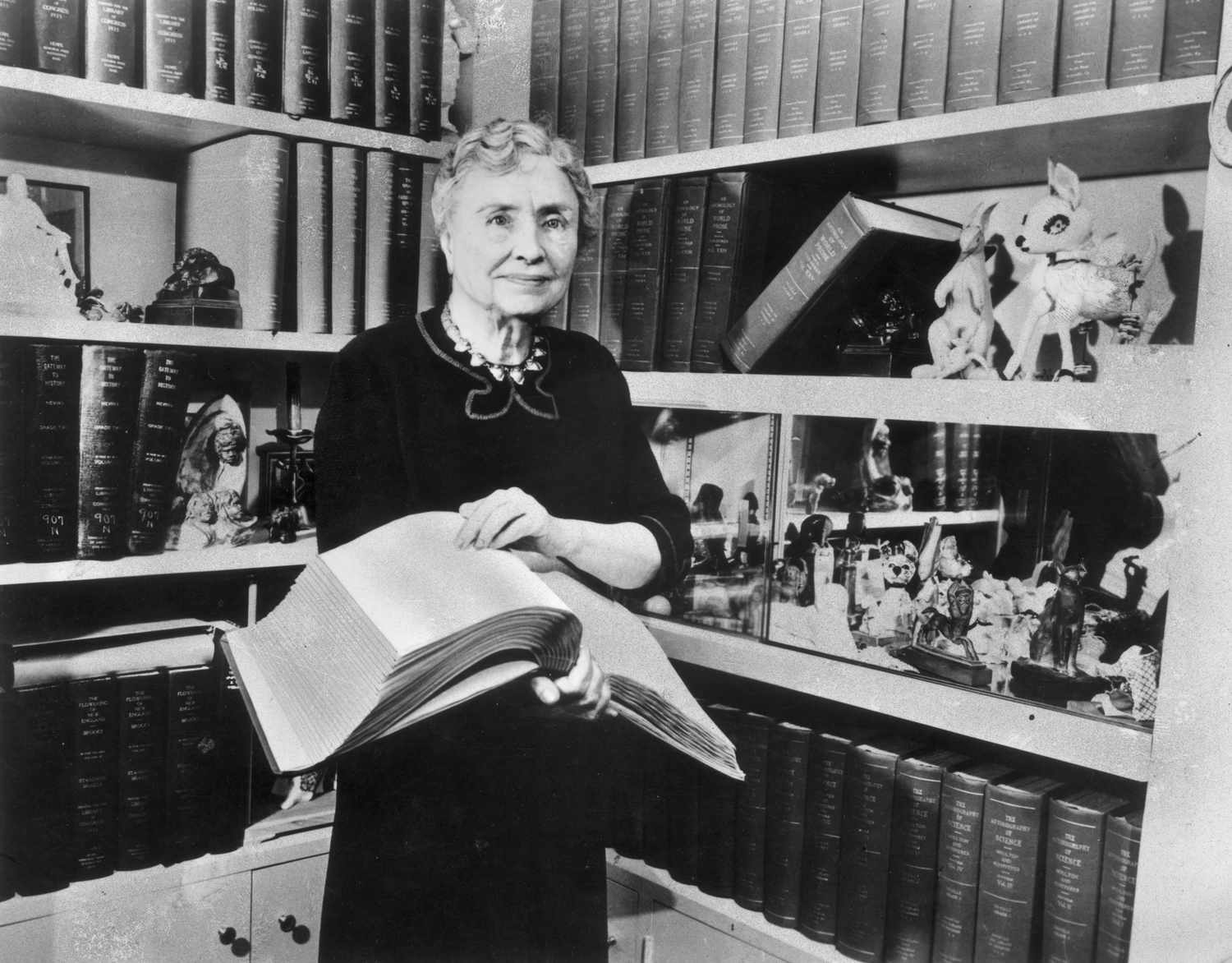
“Character cannot be developed in ease and quiet. Only through experiences of trial and suffering can the soul be strengthened, vision cleared, ambition inspired, and success achieved.”¹
Questions to consider as we read:
- How conscious are we of what motivates and drives our behaviours in any given moment?
- What are the underlying motivations that propel our desire to know something?
- In what does character consist? In right behaviour? In right desire? In both?
- How, if at all, does this reflection invite a different framing of our felt failures as we pursue characterological growth?
“Character cannot be developed in ease and quiet. Only through experiences of trial and suffering can the soul be strengthened, vision cleared, ambition inspired, and success achieved.”¹
Questions to consider as we read:
- How conscious are we of what motivates and drives our behaviours in any given moment?
- What are the underlying motivations that propel our desire to know something?
- In what does character consist? In right behaviour? In right desire? In both?
- How, if at all, does this reflection invite a different framing of our felt failures as we pursue characterological growth?
In this season of my life, I have opportunity to be present to my own experience more, perhaps, than I had bargained for. In the aftermath of stepping away from my practice into this new wilderness, I am becoming acquainted with what a busy mind I have, with how potent my interests and pursuits can be, and with what a burden that can become for those with whom I am most intimately involved in relationship. My own family, my closest friends, my spiritual director, my family of origin.
For nearly my entire adult life, my days have, in a certain sense, been dictated to me by the needs of others. I don’t begrudge this. To the contrary, a very large part of me prefers it. I am a man who craves purpose and direction—like most people, I suppose. On those grounds—unsurprisingly, perhaps—I responded early in life to a “call” to be with others in their need as my primary means of employment. What I couldn’t have seen on the front end of that journey was precisely how much of my inner consent to that particular life-calling was motivated by the quest for an illusory and amorphous notion of certainty. Were I to give that impulse a voice, it might sound something like this: “So long as I am relationally and professionally engaged with someone in an attempt at accompanying and guiding them inside of their needs, I am never wasting what has been given to me; I am being faithful with my gifts, my capacities, and the time—the days of my life—with which I have been graced.”
On the surface of it, this impulse in me is a praiseworthy one. It bespeaks a life submitted to service. Many of our non-conscious contracts (see my article, The Contracts That Imprison Us and How to Overcome Them) are nested in a clothing of virtue. This impulse in me seems to place the needs and interests of my neighbour in the light of their true importance. It requires an arrangement of my faculties, my time and my energy that is not merely contingent upon my wants, etc., etc. What I seem to have missed along the way is the way that so many aspects of the inner architecture of my life were predicated upon a mistaken understanding of rich character and how to form it.
I’m grateful that you’ve stayed with the reading thus far, so I wonder if you’d allow me to elaborate:
If you’ve arrived here on the website, it’s likely that the subject of character fits for you. It’s a central part of your own quest, whether, as a sustained interest of yours, or as an interest that you’ve been ‘brought’ to by some moral failure—whether your own, or someone who hurt you. We are thus a fellowship of people who are decisively oriented to the finding of the real person, to reception of our true names, etched in stone by the One who formed us in such love… (see my article: You Are God’s Good Idea: A Look at The White Stone).
If these subjects pull at your heart, you’re here located in community. Welcome to the company of others who live lives of intention with careful regard as to how we occupy our days. The ember that burns in each of us—the ember that I have been blessed to witness in your lives in varying ways across a tapestry of aspirations in family and professional life—amounts to a grace that none of us conjured. Perhaps that ember, that flickering hope, can be framed in us as the desire to act in concert with what love invites of us. That is its true nature, because that is our true nature as those made in the Image of the God who is Love. We long to love because we are made by Love. This reality in our nature is, at once, profoundly simple and simply profound. It says what we are in essence when all other articulations fail us. We desire to act in concert with what love invites of us. Given the potency of this hope, however, given the many ways that this quest gnaws at us, it is woefully vulnerable to distortion.
The potency of such desires is also marked by a propensity to hurry toward a virtuous goal, and this may be where we are most likely to run into injury. We men (speaking here for my host species) have the habit of trying to find the quickest path between two points. This certainly one of the most glaring of our compulsions. How many of our wives (you, married men) have told us that they would simply like to be heard as opposed to taught or corrected or explained to? How often do we try to narrow a matter to a point, rather than expanding the set of inquiries for the sake of deepening a dialogue? We like to know. We like to explain. We like to teach. We prize competence.
It’s more comfortable than the alternative. The finest sports cars in the world are capable of movement from one destination to another with remarkable dexterity and speed—they are also vulnerable to catastrophic destruction if not operated by one who has the requisite expertise to arrange the capacities of that machine in an optimized way. Along these same lines—like most who get attached early to a life-quest, like those of us who were destined not to colour in the lines, who emerged from our adolescence and engaged the journey of manhood with an interest in building something of our own—we are vulnerable to being propelled by a quest for certainty as we engage the journey of our vocational and professional lives. We crave it and the psychological safety that it seems to promise. The paradox, of course, is that the experience of certainty epitomises invulnerability. It inures us in a view of ourselves as whole or complete. It enshrouds us in the fog of our own supposed expertise. It atomizes us in a silo wherein we deem ourselves not to be “the one in need”.
If I trace the threads behind me carefully, it seems clear that I became attached to the quest for good character early in life. Just as did many of you. Various forms of suffering in family and in community served to bolster and to hasten these movements in me. Somewhere along the way, however, I adopted a myth. I couldn’t see the myth because of the attractive clothing I had given it.
The threads of this clothing were woven together in the something like the following: “If I simply learn to take on habits of mind and heart that are aligned with those of Jesus as the greatest teacher who ever lived, and if I study the perennial wisdom tradition with devoted effort, I will be able to overcome the various forms of darkness that lurk in me, I’ll find a way to live that is properly armed against that darkness and I’ll be able to teach others to do the same. I’ll pursue the formation of “right character” at all costs and somehow this will translate into a better organized existence for me and those I love.”
Comparative statements of that sort rattled around in my mind and heart in nearly every conscious moment I had as a young man. It was sounded back to me as an echo from my own heart in the cave of my own naiveté. Once again, my vulnerability is exposed. Not only will we be outdone by the various and explicit appetites that exist in us as chosen moments of sinful indulgence, we’ll even be outdone by our mistaken apprehension of what is good.
Christ’s perpetual references to us as sheep and children are no mere paternalistic prose, they are loving assessments made by the Master of a population who have yet to grow up into what we’re meant to be: people filled with knowledge and wisdom who are surrendered to love in the very manner of Jesus. The appeal of this condition compels us to grab at distorted versions of it that promise “arrival”. Therein lies the rub. We aim at the quickest path to feeling full, rather than determining to be properly nourished. So strongly do we crave the mitigation or elimination of our temporal suffering that we are willing to engage in a deception. We’re malnourished, but we don’t want to invest the time to cook a nutritious meal. Instead of choosing nourishment, therefore, we quest merely for the cessation of our hunger. We choose to grab a Big Mac or that handful of sour patch kids and the subsequent sugar-rush, instead of taking the time to cook an oxtail stew. I’m afraid that something along these lines has happened in the forms—religious, professional, academic, communal, and individual—inside of which we cast the matter of character formation. In our craving of the effects of good character, of the end of the particular forms of suffering that accompany its absence, we reify the attainment of character into a host of steps or platitudes. We adopt the mechanistic way of the world and inject it into an ancient wisdom tradition from which we demand results.
That is the Modern way, to find the quickest path between two points. It is a particularly masculine impulse, and it has served in so many ways to produce the very “world” in which we live—the one that we’ve arrived here to attempt to reform. It is that from which the Grand Narrative of the modern West—that scientistic, mechanistic, technocratic, empirical way of the Modern world—derives its justification and establishes its infrastructure.
In this season of my life, one where my eyes are invited again, not only to the individual and their need as they sit before me, but to the very structure and state of the world and society, I see how difficult it is not to become absorbed by these same impulses. The impulse to find the quickest line between two points. I am vulnerable to the very same host of compulsions. Character is, indeed, essential. And to be sure, our society will always travel in the direction of the collective character of its inhabitants, on track with whichever habits of thought and behaviour most mark the shared interests of the whole. We’ve witnessed nothing other in the past and are witnessing nothing other in our current epoch.
Character, however, proves not to be marked or most clearly evidenced by mere technical expertise; you can’t verify it that way. It proves to consist in something much deeper than having done the “right” thing in the right moment. It proves, so far as I can tell, to be marked by an inner condition of the heart. This shows up and is sustained as an inner orientation to oneself and the world—a way of seeing and being—more than as a host of tactics or a formula that guarantees the right answer to an equation. That is what Jesus referred to as the leaven of the Pharisees³—they, too, wanted the quickest path between two points. We’re told that they celebrated themselves for it. We’re also told that they missed the whole point. In the end, leaven pervades the whole of the object it inhabits. It takes over. We crave the tactics—for those appeal to our sense of competence, they feed our desire for certitude, and they tease us with temporal relief—but it is the inner condition that we need. Only then will our hunger be sated in a manner that lasts, in a manner that brings more life to life.
Psychologist, Mattias Desmet, reflects beautifully—I daresay, lovingly—upon our proclivity to misconstrue our aims as we succumb to our craving for safety, security and control.
“We have to consider the current fear and psychological discomfort [about the state of the world] to be a problem in itself, a problem that cannot be reduced to a virus or any other “object of threat.” Our fear originates on a completely different level—that of the failure of the Grand Narrative of our society. This is the narrative of mechanistic science, in which man is reduced to a biological organism. A narrative that ignores the psychological, symbolic, and ethical dimensions of human beings and thereby has a devastating effect at the level of human relationships. Something in this narrative causes man to become isolated from his fellow man, and from nature; something in it causes man to stop resonating with the world around him; something in it turns the human being into an atomized subject. It is precisely this atomized subject that… is the elementary building block of the totalitarian state.
Totalitarianism is not a historical coincidence. In the final analysis, it is the logical consequence of mechanistic thinking and the delusional belief in the omnipotence of human rationality. As such, totalitarianism is the defining feature of the Enlightenment tradition”⁴
In other words, all quests for certainty, all quests to perfect, seem to devolve into totalitarian interests, into wayward compulsions and hubris, even—perhaps, especially—those quests in search of character.
It’s more convenient to farm out our observations of such to the Joseph Stalin’s, the Klaus Schwab’s and the Justin Trudeau’s of the world than it is to ourselves. In the moment that we are hurrying our wives out of their exploratory thought, or are telling our child how something must be done, it’s not convenient to think ourselves tyrannical. Afterall, what we want is so good, is so much for their good.
Right.
How easy it is to become a fundamentalist. How vulnerable we are in the quest for righteousness to have our efforts devolve into self-righteousness. How strongly we want simply to do something the “right way” so that we can pronounce over ourselves a verdict of virtue.
The stronger and more efficacious we become, the more vulnerable we become to totalizing views and exacting forms of justice. The more we become convinced that we’ve done it right, the more we are separated as the self-proclaimed expert from our spouse or our colleague who doesn’t yet see our way, who has yet to achieve (our) enlightenment. In this sense, everything from the way that we keep our home to the way that we think about or see the world, from how to load a dishwasher to how to think about geopolitics, becomes yet another opportunity for us to become a little less vulnerable and a little more certain. A little less damaged and a little more virtuous. A little more buffered and a little less porous. Lord, help us. Lord, help me.
Are we therefore doomed? In a certain sense, yup. That seems plain enough. But, what if there is an opportunity lurking in the apparent doom? What if what we’re doomed to can serve us in a way that the Grand Narrative of our culture is itself doomed never to see?
Sometimes the moment calls for finding our “why”. That’s Simon Sinek, and that horse continues to bless people even as it continues to be beaten. Sometimes the moment calls for having our “why” transformed, however. That’s Jesus. It turns out that the desire to be more comfortable perpetually interrupts entry into the domains of development where character can take hold. If we allow our quest for character to be hijacked by the desire for things to finally work rightly, or to face less chaos in my family, or to see routine positive feedback become a reality from family, friends, and colleagues, we are predestined to a life of starvation. We can’t game character.
Recall C.S. Lewis indicating the same through Uncle Screwtape, who encouraged his demon-protégé, Wormwood, to induce “an ever increasing craving for an ever diminishing pleasure” in his patient.⁵ The aim of evil is to distort all our aspirations by wooing us into a virtuous effort for the wrong reasons; to have us properly convinced that we’re on the right path as it sullies our “why” with a hidden distortion. Thus, we engage the matter of character to be made more comfortable, or to feel more certain, or to become an expert, all to be buffered against the realities of our own fractures.
Psychologist, Adam Grant, a former Olympic diver, is a renowned organizational psychologist and is a prolific researcher in the territory of human performance and optimization. He is one of the most celebrated professors in the field of psychology according to student appraisal. He has received the highest ranking among his colleagues at The Wharton School for seven consecutive years. Grant has, by all available standards of measure, ascended to the full heights of success and utility within in his field. In his book, Hidden Potential: the science of achieving greater things⁶, he takes a novel approach to the psychology of peak performance enhancement. He invites a new framing for the host of human considerations that were cast aside in the study of peak performance during the last century, those deemed in the 1960’s to be “soft skills”. The warrant for deeming such skills to be “soft” in the era just referred to was that such skills didn’t translate into direct proficiency in operating machinery (guns, tanks, etc.) as the nation siphoned off evermore of its resources into the Military Industrial Complex. According to Grant, the loss of these characteristics in our culture as a central focus in the territories of education, of business, and of performance in everything from chess grand mastery to language acquisition, amounts to one of the most costly and consequential oversights of the last century:
“Computers and robots can now build cars, fly planes, fight wars, manage money, represent defendants in court, diagnose cancer, and perform cardiac surgery. As more and more cognitive skills get automated, we’re in the midst of a character revolution. With technological advances placing a premium on interactions and relationships, the skills that make us human are increasingly important to master.
When we say success and happiness are our most important goals in life, I’m curious about why character isn’t higher on the list. What if we all invested as much time in our character skills as we do in our career skills? Imagine what America would look like if the Declaration of Independence granted every citizen the right to life, liberty, and the pursuit of character.”⁶
What does all of this amount to as it pertains to our day—this one—and tomorrow? How does this translate in our lived experience? Perhaps we can distill it all down to a principle: quests for the reduction of discomfort will never pay to us what endurance in the quest to remain in right relationship can. Right relationship with ourselves, with God, with our neighbour. Ditch the demand for things to become easier. They will, but not directly and not in the way that our last personal attempt at defining the term, “ease”, supposed. Adopt a “why” nested in the determined interest to give honest articulations to ourselves and others about our true condition. Find contexts (consider investing time in solitude and silence), where you can be honestly presented to yourself at a gentler pace of thought and/or prayer. Present yourself to… you, and to others (wherever you’ve verified that the context can hold such an aspiration with appropriate safety and honour). Do this as you actually are. As one in need. Quit looking for “final relief” in the familiar forms that we all (myself included) are so accustomed to seeking it.
In such a frame, we are free to celebrate where relief or growth are experienced without conferring upon ourselves and others the illusory demand to remain there. In other words, we resign ourselves to never arriving, but to always aspiring. We ditch the fear-based hubris of our status as the expert and pick up in its place a determined effort to become accustomed to struggle. Character isn’t first for relief. It’s for redemption. It isn’t first for right behaviour, it’s for right relationship. It isn’t for secured status, it’s for secured submission to the right resources as the very grace of God.
Three forms of courage, according to Grant, are required for growth in the acquisition of new skills. We’ve been ask questions at Vocatio about how to become better relators with spouses, children, employees and associates. We’ve been observing ways that we can become more patient, more measured with regard to how we experience our anger, more self-aware as it relates to understanding what motivates us in a given moment. To these questions, I submit Grant’s tripartite model of courage for deeper consideration. Each of these forms exist within a prior requirement: that we learn to get comfortable being uncomfortable. Seems to suck, I know. Grant elaborates,
“Summoning the nerve to face discomfort is a character skill—an especially important form of determination. It takes three kinds of courage: to abandon your tried-and-true methods, to put yourself in the ring before you feel ready, and to make more mistakes than others make attempts. The best way to accelerate growth is to embrace, seek, and amplify discomfort.” (p.26).
Why do this? Because we long to become the sort of people who have learned to do what love invites and to refuse what fear demands. Not much of that proves to be comfortable. That won’t change. Our understanding of that fact can, however. I submit to you that we do this because we require a worthy purpose for our lives and can find none greater than developing habits of heart and mind that are possessed by the interest in joining God in bringing more life to life. Manhood consists inasmuch. So does womanhood. It’s going to hurt, but not nearly as badly as the pain thrust upon us outside of such pursuits. I’m praying for us as we go, friends. I’m prepared to stand with you in the discomfort. Thank you for the ways that so many of you have done the same for me.
“Never forget that when we are dealing with any pleasure in its healthy and normal and satisfying form, we are, in a sense, on the Enemy’s ground. I know we have won many a soul through pleasure. All the same, it is His invention, not ours. He made the pleasures: all our research so far has not enabled us to produce one. All we can do is to encourage the humans to take the pleasures which our Enemy has produced, at times, or in ways, or in degrees, which He has forbidden. Hence we always try to work away from the natural condition of any pleasure to that in which it is least natural, least redolent of its Maker, and least pleasurable. An ever increasing craving for an ever diminishing pleasure is the formula. It is more certain; and it’s better style. To get the man’s soul and give him nothing in return—that is what really gladdens Our Father’s heart. And the troughs are the time for beginning the process.” (pp.44-45). The demon Uncle Screwtape to his protégé and nephew, Wormwood, in C. S. Lewis’ The Screwtape Letters.⁸
Footnotes
¹ Helen Keller, as cited in Grant, A. (2023). Hidden Potential: The Science of Achieving Greater Things. New York: Viking.
² Holy Bible. Matthew 16:6.
³ Desmet, M. (2022). The Psychology of Totalitarianism. Chelsea Green Publishing: Vermont, p. 7.
⁴ Lewis, C. S. (1996). The Screwtape Letters. San Francisco: HarperCollins.
⁵ Grant, A. (2023). Hidden Potential: The Science of Achieving Greater Things. New York: Viking.
⁶ Grant, A. (2023). Hidden Potential: The Science of Achieving Greater Things. New York: Viking, p. 22.
⁷ Lewis, C. S. (1996). The Screwtape Letters. San Francisco: HarperCollins.