The Discipline of Silence and Solitude: Some Aids For Practiced Reflection
Richard Foster opens his masterpiece on the spiritual life, Celebration of Discipline: The Path to Spiritual Growth, with a definitive statement. I recall being so taken by his words when I first read them some 20-years ago, that they were immediately set within me to memory:
Superficiality is the curse of our age. The doctrine of instant satisfaction is a primary spiritual problem. The desperate need today is not for a greater number of intelligent people, or gifted people, but for deep people. (p.1)1
Those words rang true and answered a call within my own heart. They provided me a proof that there were others ‘out there’ who cared to answer the call to return to the sources in spiritual life that had always constituted and invited, depth. Depth of thought, depth of experience, depth of knowledge, depth of character. Foster and others recognise solitude and silence (in tandem) as the arbour around which all other spiritual disciplines occur, because it is there that we are rid of that which is not us—there, we are stripped away and undone until what is left in the silence is truly ourselves in the presence of God.
It turns out that there is so much there to be stripped—so much undue attachment in us to our own words, to our vices, to our emotions and our ‘plan’—that entry into the dynamic is guaranteed, for most, to be uncomfortable. We find that we are not immediately liberated upon entering in, but rather, that we are exposed. Exposed to the swarm of competing interests, fears, unsatisfied longings, gnawing offenses, and unresolved conflicts—with our children, our colleagues, or our spouse, perhaps—that rattle around our mind, heart, belly and loins, storming our insides and fracturing our peace. We find those aspects of our mind and heart that have yet to be ordered and brought to heel around the interests of God’s Spirit and will. There we are confronted with our smallness and our need.
Quite understandably, we don’t want to face this. So, rather than stopping to learn what is ‘within’, rather than persisting in the effort to learn inner stillness, we lurch toward more of what is without, becoming more hurried, fearful, frenetic, and emaciated along the way. On some occasions, we’ll create a project that will give us the next hit of dopamine and enough of a sense of accomplishment to be a temporary bulwark against the matters that haunt us within. On others, we’ll seek the quickest path to separation from the weight of things, whether through the bottle, the screen, or a new material acquisition—the newest ‘wearable’ through which to stimulate and streamline our interests, or that shiny new whip we’ve had in our sites. Through the sense of empowerment that our ‘successes’ tend to grant us in business, or the acquisition of material that our labours there tend to afford, it is revealed to us that we are both hungry and insecure. We look to these to shield us from the disquieting vulnerability that marks our humanity and our days.

Foster wisely invites us into the view that all of this is, at heart, a matter of trust.
One reason we can hardly bear to remain silent is that it makes us feel so helpless. We are so accustomed to relying upon words to manage and control others. If we are silent, who will take control? God will take control, but we will never let him take control until we trust him. Silence is intimately related to trust.2 (pp. 100-101).
Do you trust that you can be okay when you are alone? How is it for you to take a break from stimulus and achievement? What becomes of your internal world when you are temporarily disconnected from the menagerie of devices, services, activities, and relationships that clamour for your attention? What and whom do you discover when you take the risk of breaking away from it all?
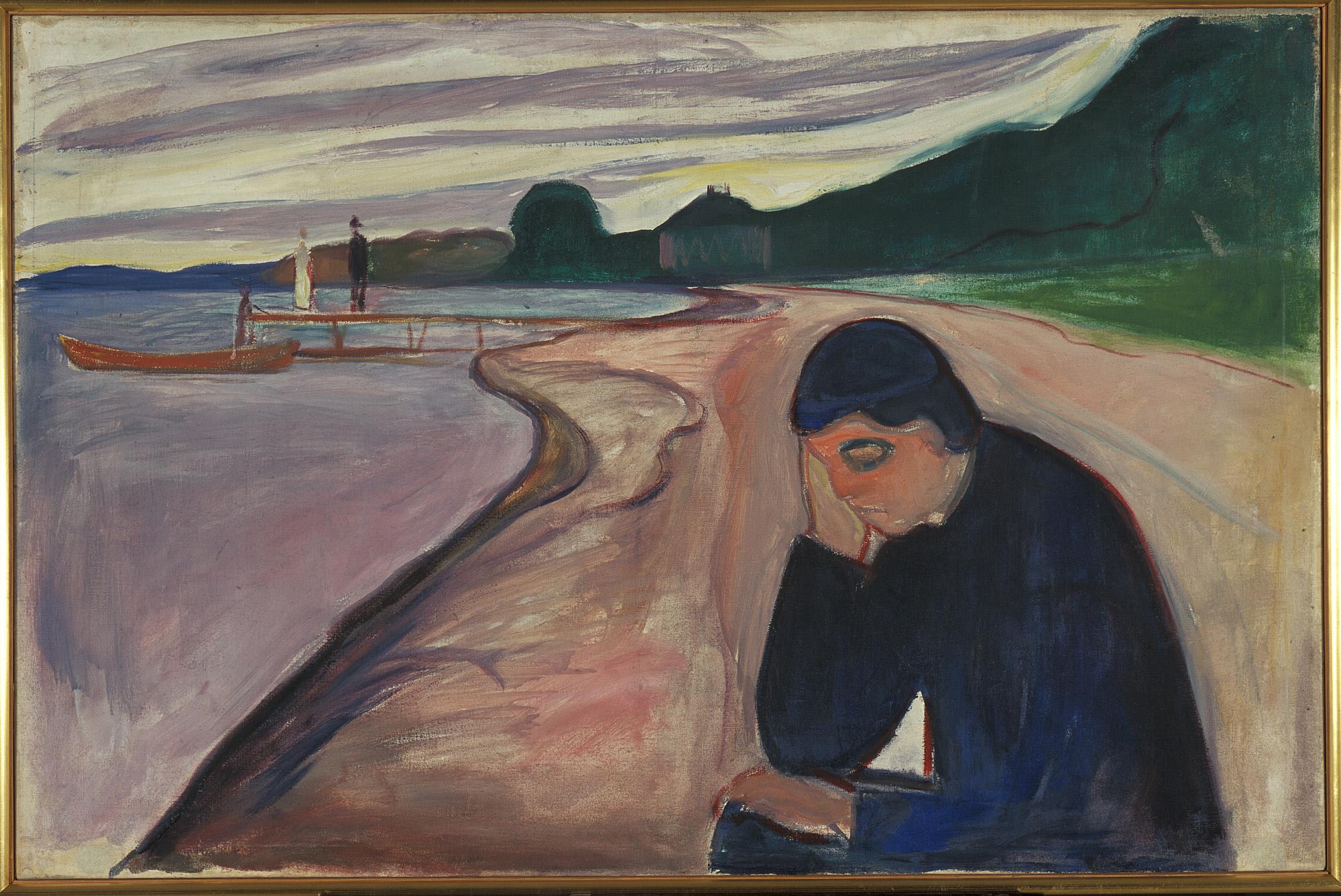
Often, what we encounter in silence and solitude is a bleakness, a place of melancholy and a lack of clarity. Foster observes how common an experience this is by inviting our attention to some ancient writers who observed the same. In particular, St. John of The Cross is referenced by Foster as a forbearer for us in these territories of the heart. It was he who first brought to the attention of the Church the utility for God of the Dark Night in our lives.
Foster states,
The “dark night” to which [St. John of the Cross] calls us is not something bad or destructive. On the contrary, it is an experience to be welcomed much as a sick person might welcome a surgery that promises health and well-being… We may have a sense of dryness, aloneness, even lostness. Any overdependence on the emotional life is stripped away. The notion, often heard today, that such experiences should be avoided and that we always should live in peace and comfort, joy, and celebration only betrays the fact that much contemporary experience is surface slush. The dark night is one of the ways God brings us into a hush, a stillness so that he may work an inner transformation upon the soul. (p.102, italics added).
If you have attempted to venture into solitude and silence and have been met by dynamics of mind, heart and body, that revealed more trouble in you, don’t be dismayed. Rather, know that those who have gone before you have experienced the same and have discovered such frustrations to be more opportunity for the Spirit to nurture us back into wellness. First, we are purged of the distorted view of ourselves that we prefer to hold—that we are invulnerable and in control—then, by grace, we are progressively led into a dynamic of trust and dependence:
When God lovingly draws us into a dark night of the soul, there is often a temptation to seek release from it and to blame everyone and everything for our inner dullness. The preacher is such a bore. The hymn singing is too weak. The worship service is so dull. We may begin to look around for another church or a new experience to give us “spiritual goose bumps.” This is a serious mistake. Recognize the dark night for what it is. Be grateful that God is lovingly drawing you away from every distraction so that you can see him clearly. Rather than chafing and fighting, become still and wait.” (p. 103).
If you are floundering in your resolve or are angered by a sense of confusion or failure in this space, my friend, take heart. Press on to discover something that you may never have experienced before; take the risk of discovering what lies on the other side of this dark valley. Foster encourages us away from despondency and from mere theorizing about these ancient practices into deep application, rooted in our behaviours and our cultivated habits:
The Spiritual Disciplines are things that we do. We must never lose sight of this fact. It is one thing to talk piously about “the solitude of the heart,” but if that does not somehow work its way into our experience, then we have missed the point of the Disciplines. We are dealing with actions, not merely states of mind. It’s not enough to say, “Well, I am most certainly in possession of inner solitude and silence; there is nothing that I need to do.” All those who have come into the living silences have done certain things, have ordered their lives in a particular way so as to receive this “peace that passes all understanding. If we are to succeed, we must pass beyond the theoretical into life situations (p. 105).
For Application:
- Commit to engaging in silence and solitude a minimum of 4-times per week, for a minimum of 30-minutes per occasion.
- As you enter in, first focus on getting grounded. If you are taking your silence and solitude in a consistent environment (an office, a prayer room, a study in your home, or a beloved place of solitude in the outdoors),
- Sit comfortably and at rest.
- Engage an introductory breathing exercise for a minimum of two-minutes. Eyes closed, good, relaxed, posture, hands at your side or on your knees, breathe in through your nose to a count of 5, hold at the ‘top’ and exhale just as slowly through your mouth to a count of five. Engage ‘diaphragmatic’ breathing, where your shoulders drop, and your navel is drawn toward a wall or object in front of you upon inhaling; your navel is drawn back toward your spine upon exhaling through your mouth. Attempt to do this in rhythm. With each breath taken and released, thank God in your mind for your very breath.
- Announce to God your interest to be met by him in solitude. Ask him to search you and reveal you to yourself. Ask him for the grace to be emptied. Do not dismay when your mind races. Simply acknowledge the hurry in your mind by noting it and then return to a focus on your breathing. You may consider a simple statement to recite when your mind wanders. “Christ, settle me.” “Christ, search me.” “Christ, have mercy on me.” Remember that you are not there to accomplish anything, only to deepen in your connection to your heart and in your trust in God’s care.
- Bring a journal and at the close of your time, note:
- Which emotions you encountered (consult the emotion wheel from last year’s curriculum as an aid here).
- Notice what you tended to perseverate or obsess over—a conflict or relationship, a fear, an insecurity, an anger fantasy, etc.—and write it down in bullet form or at length. Perhaps you don’t find yourself in a “Dark Night” at all. In this case, note which joys or insights emerged for you. Put your gratitude to simple words: “God, thank you for these relationships; for your aid in overcoming x problem; for your mercy and gentleness to me as I learn and grow.”
- Take these matters into prayer in during the remainder of your week; notice the way that God is loving you into new perspectives regarding your place in relationship and the matters that unconsciously guide you in these spaces—He is revealing your heart to you and granting you the grace of humility.
- Share your discoveries with a friend from the group and encourage them in what they have to share with you from their experiences of solitude and silence.
May you each be blessed with fresh insight and capacity in these territories and may we all become, a little more, the sorts of men who know settled interiority as our true home in God. God bless you, friends, as you summon the courage and the stamina to explore these ancient pathways into the peace of God in Christ.
Footnotes:
- Foster, R.J. (1998). Celebration of Discipline: The Path to Spiritual Growth. HarperCollins: San Francisco.
- Ibid.