Luke Chapter 7: Jesus Heals a Centurion’s Servant
1When He had completed all His discourse in the hearing of the people, He went to Capernaum.
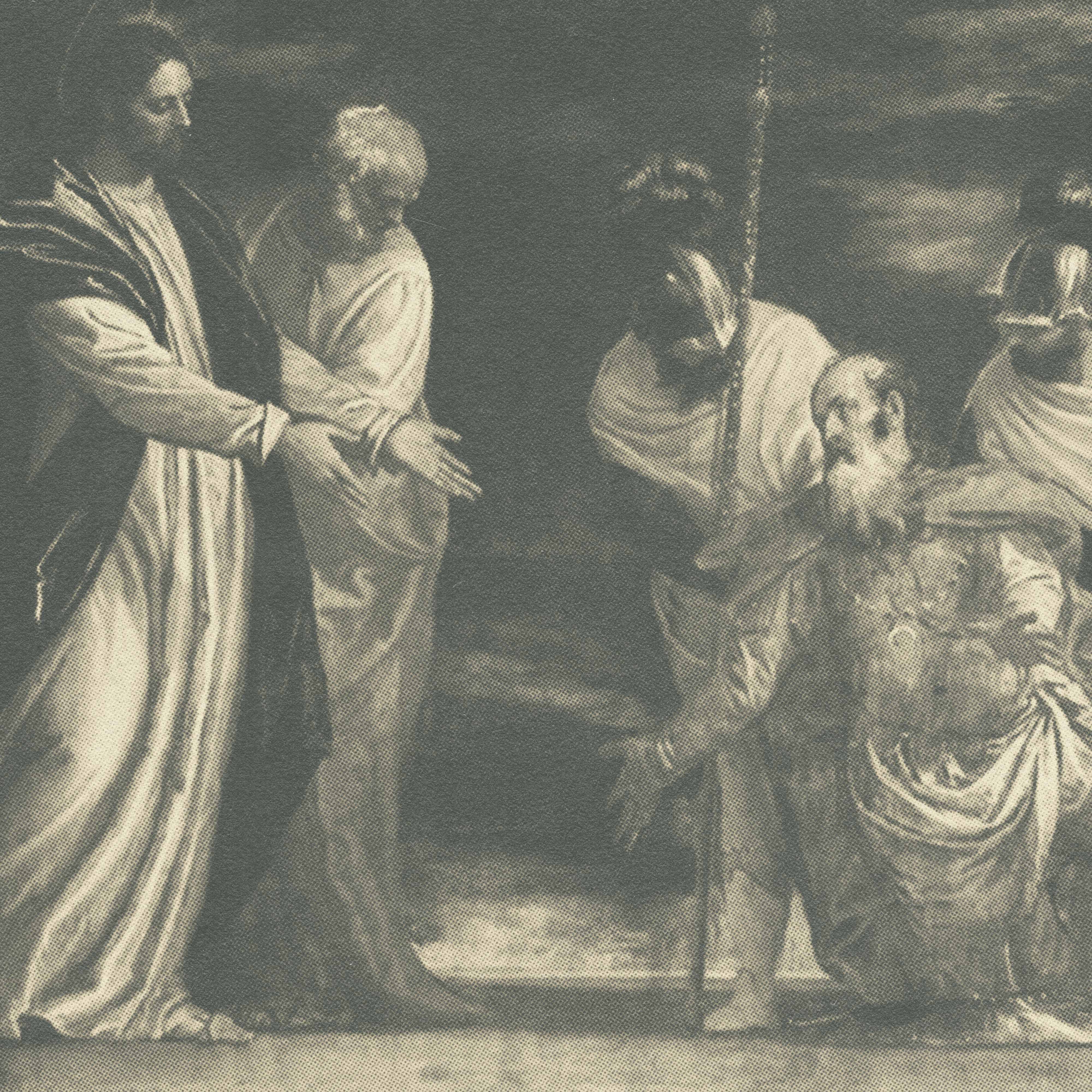
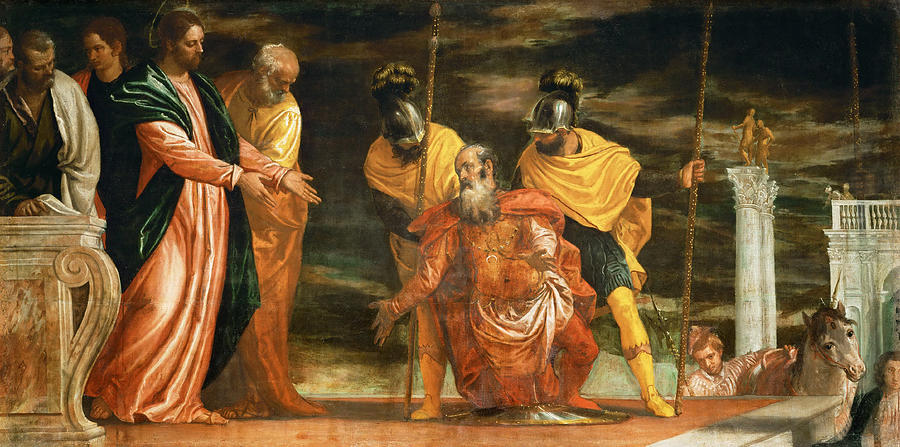
2And a centurion’s slave, who was highly regarded by him, was sick and about to die. 3When he heard about Jesus, he sent some Jewish elders asking Him to come and save the life of his slave. 4When they came to Jesus, they earnestly implored Him, saying, “He is worthy for You to grant this to him; 5for he loves our nation and it was he who built us our synagogue.” 6Now Jesus started on His way with them; and when He was not far from the house, the centurion sent friends, saying to Him, “Lord, do not trouble Yourself further, for I am not worthy for You to come under my roof; 7for this reason I did not even consider myself worthy to come to You, but just say the word, and my servant will be healed. 8For I also am a man placed under authority, with soldiers under me; and I say to this one, ‘Go!’ and he goes, and to another, ‘Come!’ and he comes, and to my slave, ‘Do this!’ and he does it.” 9Now when Jesus heard this, He marveled at him, and turned and said to the crowd that was following Him, “I say to you, not even in Israel have I found such great faith.” 10When those who had been sent returned to the house, they found the slave in good health.
11Soon afterwards He went to a city called Nain; and His disciples were going along with Him, accompanied by a large crowd. 12Now as He approached the gate of the city, a dead man was being carried out, the only son of his mother, and she was a widow; and a sizeable crowd from the city was with her. 13When the Lord saw her, He felt compassion for her, and said to her, “Do not weep.” 14And He came up and touched the coffin; and the bearers came to a halt. And He said, “Young man, I say to you, arise!” 15The dead man sat up and began to speak. And Jesus gave him back to his mother. 16Fear gripped them all, and they began glorifying God, saying, “A great prophet has arisen among us!” and, “God has visited His people!” 17This report concerning Him went out all over Judea and in all the surrounding district.
A Deputation from John
18The disciples of John reported to him about all these things. 19Summoning two of his disciples, John sent them to the Lord, saying, “Are You the Expected One, or do we look for someone else?” 20When the men came to Him, they said, “John the Baptist has sent us to You, to ask, ‘Are You the Expected One, or do we look for someone else?’ ” 21At that very time He cured many people of diseases and afflictions and evil spirits; and He gave sight to many who were blind. 22And He answered and said to them, “Go and report to John what you have seen and heard: the blind receive sight, the lame walk, the lepers are cleansed, and the deaf hear, the dead are raised up, the poor have the gospel preached to them. 23Blessed is he who does not take offense at Me.”
24When the messengers of John had left, He began to speak to the crowds about John, “What did you go out into the wilderness to see? A reed shaken by the wind? 25But what did you go out to see? A man dressed in soft clothing? Those who are splendidly clothed and live in luxury are found in royal palaces! 26But what did you go out to see? A prophet? Yes, I say to you, and one who is more than a prophet. 27This is the one about whom it is written,
‘Behold, I send My messenger ahead of You,
Who will prepare Your way before You.’
28I say to you, among those born of women there is no one greater than John; yet he who is least in the kingdom of God is greater than he.” 29When all the people and the tax collectors heard this, they acknowledged God’s justice, having been baptized with the baptism of John. 30But the Pharisees and the lawyers rejected God’s purpose for themselves, not having been baptized by John.
31“To what then shall I compare the men of this generation, and what are they like? 32They are like children who sit in the market place and call to one another, and they say, ‘We played the flute for you, and you did not dance; we sang a dirge, and you did not weep.’ 33For John the Baptist has come eating no bread and drinking no wine, and you say, ‘He has a demon!’ 34The Son of Man has come eating and drinking, and you say, ‘Behold, a gluttonous man and a drunkard, a friend of tax collectors and sinners!’ 35Yet wisdom is vindicated by all her children.”
36Now one of the Pharisees was requesting Him to dine with him, and He entered the Pharisee’s house and reclined at the table. 37And there was a woman in the city who was a sinner; and when she learned that He was reclining at the table in the Pharisee’s house, she brought an alabaster vial of perfume, 38and standing behind Him at His feet, weeping, she began to wet His feet with her tears, and kept wiping them with the hair of her head, and kissing His feet and anointing them with the perfume. 39Now when the Pharisee who had invited Him saw this, he said to himself, “If this man were a prophet He would know who and what sort of person this woman is who is touching Him, that she is a sinner.”
Parable of Two Debtors
40And Jesus answered him, “Simon, I have something to say to you.” And he replied, “Say it, Teacher.” 41“A moneylender had two debtors: one owed five hundred denarii, and the other fifty. 42When they were unable to repay, he graciously forgave them both. So which of them will love him more?” 43Simon answered and said, “I suppose the one whom he forgave more.” And He said to him, “You have judged correctly.” 44Turning toward the woman, He said to Simon, “Do you see this woman? I entered your house; you gave Me no water for My feet, but she has wet My feet with her tears and wiped them with her hair. 45You gave Me no kiss; but she, since the time I came in, has not ceased to kiss My feet. 46You did not anoint My head with oil, but she anointed My feet with perfume. 47For this reason I say to you, her sins, which are many, have been forgiven, for she loved much; but he who is forgiven little, loves little.” 48Then He said to her, “Your sins have been forgiven.” 49Those who were reclining at the table with Him began to say to themselves, “Who is this man who even forgives sins?” 50And He said to the woman, “Your faith has saved you; go in peace.”
_____________________________________________________________
A Man Not Offended By Christ:
“Blessed is he who does not take offense at Me”… what could this mean but, “blessed is He who delights in the things I have said are good and who is disposed to the occurrence of such good wherever possible”? The Centurion in Luke 7, the one we know as “under authority,” is often reflected upon for the size of his ‘belief’. If he is mentioned from a lectern or pulpit in our era, the frame we are given for his place in the scriptures is as an exemplar of such ‘faith’. We are commonly called upon in our time, to believe just as strongly—as the Abraham, Joshua and Esther, later, this very Centurion, John The Baptizer, and Blind Bartimaeus—so that that which we wish to occur will occur. This is a common formulation for both our life of faith itself and the prayers that mark it. “When you run into trouble, believe very strongly in Jesus and petition him just as strongly to end your trouble.” Something along those lines marks the Christian worldview of the many people I have engaged in such communities, whether professionally or in friendly dynamics. Prayer as a spare tire rather than a steering wheel, as Corrie ten Boom once quipped. What happens in the spaces in between—the ones where we spend most of our time and energy—seems often to involve little of God besides.
Into such spaces, and in such a manner, with a range of conviction that runs a high tight rope from blind faith to charismatic frenzy, we teeter atop our requests. Requests for clarity in our calling and our business, for the children we long for or the children we’ve lost, for the matters that we wish to be made right in the lives of the children we have, for our plight to overcome some unrelenting vice, for resolution to be found with that difficult colleague, for the healing of our friend or sibling with cancer. The emphasis is usually on belief, and belief is usually likened to some inward assurance, a fortitude held regardless of understanding, that is supposed to render the one praying immune to doubt. Often, the interests of God in this space, His leveraging of our doubts and our worries—the stuff of our real lives—for our favour, is thwarted by our distorted emphasis on mere belief.
When Innocence is Substituted for Ignorance
Such ‘strong belief’ is routinely aimed at in a fashion that is separated from the practical dynamics of life—the ones with which we must contend. This is a kind of faith wagered more strongly on emotion and our ‘willing’ than it is upon understanding. Consequently, this faith tends to be lived outside of the motion of God in our lives and is very often met with a particular silence. Not indifference, which would impart contempt and shame, but kind refusal. Refusal to allow the one praying to enter any further into the frenzy of uneducated, uninformed, and often unwise desire.

In the silence, I wonder if we’re being invited away from our frenzy because it wasn’t actually faith that kept us there, but an attempt at a kind of magic. That is, “I engage in these incantations, these displays of wild emotion, this ‘proof’ of my sincerity, and You, Just God, Sole Sovereign over all, will be favourably disposed to my plight”… It is a dense irony, the amount of good protein that has been slaughtered in search of such spoils. Besides this, a lot of theater—theatre masquerading as high religion—has been engaged in enticement of our wildest wishes and undiscerned impulses… “We danced for you and you did not laugh, sang a dirge for you and you did not weep.”
We seem to misunderstand something crucial, that we are not meant to pray with the ignorance of children, but rather their innocence. But pray with ignorance we often do. As this occurs in us, this attempt at drudging up within ourselves the kind of emotional fervour that we imagine strong belief to be marked by, the realities of life—realities like death itself, and cross-cultural relations, and nations at war, and parents outliving their children—evade our own ability to contend with them. Our growth and development are thus arrested. “All neuroses are a substitute for authentic suffering,” exclaimed Jung. We end up a rather noisy lot, weeping and petitioning without any ready willingness to be changed in the process of our prayer. Perhaps you’ve been to a service or a prayer meeting like that. Perhaps you’ve prayed that way. Perhaps you’ve likened a lot of what faith is to something along those lines.
Because of our ignorance and naiveté in these critical aspects of our lives, the primary interest of God in relation to our prayers must be to change us in relation to our petition; to shape us into proper relation to the matter for which we seek resolution; to inform and fulfill in us the aspects of our lives and our understanding that are incomplete or ignorant in the space of our perceived needs.
Understanding Begets Trust, Trust Leads to Engagement, Engagement Grows Faith:
In contrast with these common vulnerabilities within the Church—from among those who regard themselves as ‘God’s people,’—Jesus’ remarks about this great man’s faith are given in relation, not only to his belief, but to his understanding, which is the only way that our faith can amount to anything real and substantive. Jesus’ admiration for the man is evidenced only after the man’s worldview is communicated. Jesus marvels at how this man sees reality, how he understands its internal order and Jesus’ place in it all, and only then does He describe the man as having great—apparently unrivaled—faith. For a faith that is not operationalized inside of the bewildering vicissitudes of life—life’s endlessly complicated and inconvenient dynamics—is a faith that is not connected to anything real, a faith that has to do with something other than the life we must all face. A faith which is, in the end, devoid of the “works” heralded by St. James as essential. A faith that is, therefore, “dead.” The Centurion understood that and seemed to have resisted it. Much of what we witness in the local congregation on a Sunday morning is this very kind of faith, a quest to be taken out of rather than further into what life is asking of us. A faith that amounts more to fantasy, that requires of the world that it be something that it isn’t. That requires of the one who so ‘believes’ it, departure, rather than entry into that same world. And yet, “God comes to us disguised as our life.”
The Studied Wisdom of The Centurion:
As I glimpse this Centurion in his context, I am struck by the thought that he is a hidden genius among the heroes of the Christian story. Like so many heroes within the history of Christianity, this one comes to us, as it were, from outside the fold. Rather than this being a story about the beginning of a faith in Jesus, this is a story about the expansion of true faith in Christ Jesus. Because of the faith that existed already in this man, Jesus had as much of a welcome encounter in the story as did the Centurion. Christ’s professed astonishment with the man beautifully indicates that our Lord was caught by surprise. For what could the Incarnation mean if Jesus were able to empathise with all human experience except that of surprise?
The remarkable nature of the fruit of the Centurion’s faith—that his slave was healed by Jesus from afar—is too often the matter that overshadows for us the beautiful life of faith that preceded it. And too often, ‘belief’—and not understanding—is reinforced as the way to define what pleased Jesus in the Centurion’s actions. No doubt the Centurion was raised up within the pagan traditions of his local culture and his day, and yet he is reported to have ‘loved’ the local Israelites whom he was appointed both to police and to govern. Somehow, he was able to see beyond the prescribed cultural barriers that encircled him. Somehow, the interests of the government for which he was an appointed adjudicator were not able to steal from him his mind and his heart and the loving dispositions that God had deposited there—as with us all—at birth. He had found a way to inhabit his true nature as one made to love. He had listened during his days for what can be heard among those who wish to hear it: “Seek and you shall find, ask and it shall be given you.” How he had inhabited his relationships with his family of origin, moved his way into imperial service, raised his children if he had any, played when there was time, and been confided in by his friends--every decision along that way had led a local community of Jews to a clarified and instantaneous verdict: “He is worthy for you to grant this to him, for he loves…
The Centurion had kept his heart and sought to wager his trust in the direction of Good long before his encounter with its embodiment in one named Jesus of Nazareth. One is shown to have resulted in the other. The way he had led his life, that long and unbroken ribbon of yeses and no’s, had led him to a proper understanding of the world and therefore to a proper and very true faith. As the expression of that faith, he evidently chose to identify and collaborate with whatever Good God had dispensed into the world around him. Somehow, while under the employ of an empire that routinely beheaded its dissidents and just as routinely employed brutality and torture as a means of forcing compliance and subduing uprising against its aims, this Centurion diligently cultivated a heart that looked for what good could be achieved amid alleged differences in race, sex, worldview, religious and spiritual traditions and national legacy. The sort that people build walls around and establish armies to support. The sort that people kill for. The sort, therefore, that mark every day in the span of human history. In that familiar human soup, this Centurion lived his faith.
I wonder if we could imagine an ICE agent taking humanitarian interest in the plight of the ‘illegals’ whom he was tasked with deporting? Or a Navy Seal so loving a community of Muslims near his outpost in Qatar that he would rally his fellow troops—upon threat of court-martialling—to rebuild the local mosque that the community had lost in the most recent barrage of bombs that reigned down upon their region? The difficulty that we meet there—the thought, “Well that would never happen, for who could conceive of such altruistic ambition, such costly virtue?” is wholly appropriate. It is exactly the kind of question that the Centurion of which we speak would also have been met by. This, and yet we are told with clarity that he had become the very sort of man that could execute with competence such ambitions. All that before his encounter with Jesus.
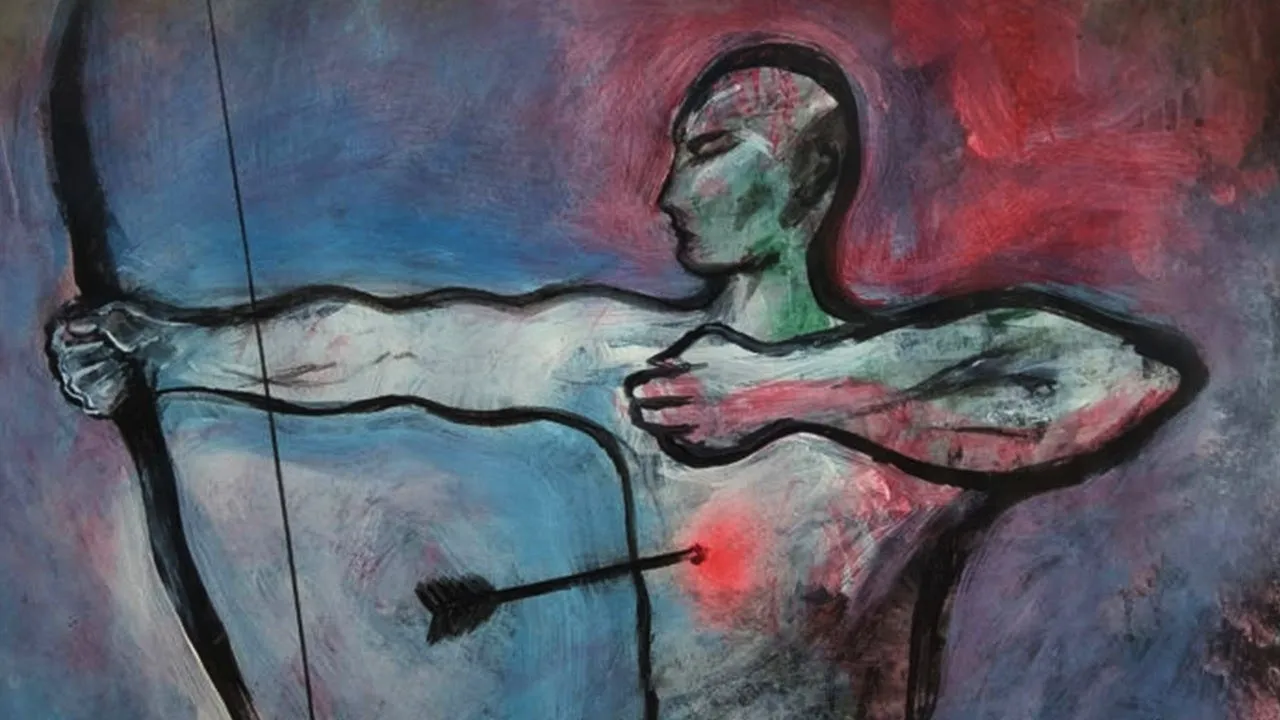
As a continued theme in our fellowship, we learn something more about the nature of truth in its virtuous outgrowth. Like the dendrites on a neuron, the nucleus of truth, when it is awakened by the Spirit, begins to signal out into its local ecology, looking for whichever connections it can make in support of life. We’re told by people like St. Paul in the first chapter of his letter to the Romans, that this sort of transformative, grounding access to the truth has been available to all since the beginning of time; that “…since the creation of the world His invisible attributes, His eternal power and divine nature, have been clearly seen, being understood through what has been made, so that they are without excuse.” The good man that we are invited to ponder here, this soldier in an imperial army, had so fashioned his mind and his heart in relation to God’s attributes that he was able in an instant to recognize when God’s very Son had merely ventured into his jurisdiction. He perceived him before he saw him. More than this, he perceived, not merely his presence, but his nature. In this—to see the nature of a thing and not merely its image—he evidenced true sight. It is possible that he never in the end laid eyes upon Jesus. That his faith didn’t require physical sight. That’s how attuned to Good this man was. He was able to identify Christ’s divinity at distance. That’s how clarified he was in his sight of the world around him. By contrast of course, the religious elite who later convened with Jesus in person could only hold Him in contempt for the goodness of God on display before his very eyes. For the coming of the Kingdom in his midst, the one deposited into each tear that fell from the eyes of a ‘sinful’ woman, that religious elite was only able to feel scorn. That religious elite, the one who regarded himself as righteous, had no eyes or ears with which to see or hear.
Doing What Love Invites and Refusing What Fear Demands as Grounds For Faith:
This Centurion’s entire life had been building toward this incredible moment, one that would enshrine him into the collective consciousness of the West for all posterity. When he met the moment with Jesus, he didn’t just believe, he understood. Because he had long been cultivating a life of virtuous engagement with his supposed ‘others’ (the neighbours that he was actively striving to bless inside of his station and its duties) and had thus been living inside of the interests and power of God, when the “Expected One” showed himself, the Centurion knew exactly Who had come near. “Submit therefore to God. Resist the devil and he will flee from you. Draw near to God and He will draw near to you. Cleanse your hands, you sinners; and purify your hearts, you double-minded. Be miserable and mourn and weep; let your laughter be turned into mourning and your joy to gloom. Humble yourselves in the presence of the Lord, and He will exalt you.” And so, he was exalted, the last one we would expect. The one we pat ourselves on the back for presuming to know, the one that it is fashionable in our time to despise. Jesus presents to us this soldier in an imperial army—this man—as the high bar on faith in Him.
I invite us here to heed the example of our worthy teacher. The one who had Caesar’s insignia emblazoned upon his chest and who carried with him a spear. The one who purposed his precarious station to be a resource for blessing rather than a bludgeon for the State. The one who loved those foreign to him. The one who defied their preconceptions and continues to defy ours. The one who was attuned with Jesus to the interests of God and about whom Jesus claimed a shared mission.
As we venture as a society further into a season of frenzied cultural and political fervor, may we have eyes to see the goodness of God in unseemly places, and when we encounter it, may it encounter in us that very humility that prostrates itself before that which is Holy and sets itself about bringing more of it. May we be prepared to take whatever hair we have left and get to washing the feet and anointing the heads of our neighbours in love.
Amen.