My work takes me in interesting directions. This week, I enjoyed the task of curation. Specifically, I had to ‘sit’ within principled themes for a multi-evening event in a large U.S. city. The aim in my task was to find visual media that invoke or suggest what we (the producers of the experience) wish for our participants to be able to consider at depth. Painted works and photographs were the media that found their way into the exhibit. They will be presented to a small group of 50-or so brave souls who have accepted an invitation to consider what it means to be human and about how that matter lands in us when we add consideration of God into the mix. It got me thinking about our group and the journey that we are all on ourselves. Got me thinking about fruitful modes of ponderance, ways of being that involve a way of seeing everything. A way, or a living pace, which allows us to find God and be found in God in the moment—any moment.
My work this week was a deeply meaningful process, one that required inhabitation—that I immerse myself, through the power of imagination, in the anticipated flow of an event intended to guide people into a more coherent and integrated glimpse into the nature of their existence, the nature of being human. Seems a heady task, I know. The gift of it all, was to have the pointed opportunity to think about the whole and the essence of life, that which is most meaningful, lasting, beautiful and, true. Such thoughts and such modes always draw us into the experience of more of God.
So often, the considerations we carry with us into and out of our days—especially, we, men—are technical. These matters are those that keep us hidden away in our thoughts, the thoughts we have above that ceiling in our heart. The ones that grant us our wish for invulnerability. The ones that gird us in our sense of competence. We hide there in our theories about God (our theological wrestling and debate), in our parenting when we become too much the disciplinarian and not enough the playful father, in our preference for sports commentary over our wife’s wish to be met by a depth of thought and feeling from us, in our management of time—when we take ourselves so seriously, we lose the permission for rest, etc., etc.
Some ceilings are thicker than others.
We men are walking paradoxes. Our hearts are enormous, but we’re so often separated from them. Too many men that I know experience feelings only as an interruption. The same sort of interruption known to those of you who have had basement tenants… one never really wants to hear from them while at rest. Too many men keep their feelings and, correspondingly, their sense of wonder, in the basement. Too many men are afraid of their feelings. Too many men have lost their sense of wonder entirely; to them, the world is merely another problem to ‘solve’ rather than the very gift of God to them. On the other side of the ledger, many men who still posse a sense of wonder are afraid to display it openly. Such men worry about how they will be received and have been enculturated away from the frank expression of surprise, gratitude, or awe.
Introducing Contemplation:
As we have stepped this year more decisively in the direction of solitude and silence as grounding spiritual disciplines for our lives, I offer a third element: contemplation.
Contemplation is the act of taking in a matter in its entirety. It could be a book chapter, or an entire book. It could otherwise be a stanza from a song, or the whimsical rising and falling of a butterfly in flight, or a stranger’s smile, or a hue at sunset. Or it could be God himself. Contemplation is a way of looking that takes us into the meaning of things at their core. It is thinking and experiencing with a preparedness to honour something in its entirety, to submit ourselves into the seeing and the holding of a matter with our whole self.
Before you run away, I’ll try to anchor this in something with which you may already have deep experience: worship. Worship is itself a state of contemplation and corresponding vulnerability. It is a state of wonder—astonished reverence—at the beauty, profundity, and ineffability (the being beyond comprehension) of God. You’ll learn a lot about yourself in a single instance of reflection upon another person in worship—you’ll either be revealed as one delighted and inspired by such a display of humble surrender or find yourself offended and judgemental in response to such ‘fickle’ displays of rapture and low-minded emotion.
C.S. Lewis found himself in the former camp, with those who are inspired by people who have minds suited to taking things in; minds capable of holding a view that a moment, or an object, or a person, requires. He said, “I had not noticed how the humblest, and at the same time most balanced and capacious, minds praised most, while the cranks, misfits and malcontents praised least…”
“Malcontent”—yeesh. Who wants to be identified as one of those?
Lewis had here realized another thread of connection to Christ’s universal call to childlike faith. He realized that Jesus emphasizes the ‘way’ of a child because of what is so rightly ordered in them, what has yet to be corrupted. They still possess their purity, they own certain clarity about their state of need. They haven’t yet been brought under the false spell of their capacities. Children don’t hide their experience, either, of beauty or hurt. They freely bring these to you to see with them. They are a refreshment to us along these lines, aren’t they?
When Only Children and Blind Men Have Eyes:
In the 10th chapter of St. Mark’s Gospel, a stunning array of big moments occur: the Pharisees famously try to trip Jesus up on divorce law, the Rich Young Ruler accosts Jesus with a weighty question about what he must do to inherit eternal life, giving rise to the opportunity for Jesus to speak about the complications of financial wealth and spiritual maturity, Jesus announces his forthcoming crucifixion in blunt and shocking terms, John and James presume upon Jesus that he ought to allow them to sit on Jesus’ left and right in his glory in heaven, and blind Bartemeus famously receives his sight because of his faith. It’s a jam-packed chapter, to be sure. Remarkably, there are only two classes of folk in the chapter who can properly see Jesus as he is. Only children and a blind man have the right sort of gaze—one, both pure and capacious enough to see the sheer size of him and the life that he has on offer. Only those capable of proper contemplation, proper sight, and intention in relation to Jesus, were able to enter into the very life that he offered on the very ground where they stood with him.
Children see properly. And so did a blind man. Both had kept their wonder. Both were humble enough to hold it.
Paul Kingsnorth, a former pagan, and renowned author, after being baptized at a Romanian monastery in Dublin, exclaimed that he had,
“found a faith that… was not a dusty moral template but a mystical path, an ancient and rooted thing, pointing to a world in which the divine is not absent but everywhere present, moving in mountains and the waters.” He stated, “The [Christian] story I had heard a thousand times turned out to be a story I had never heard at all.” (p.395).
Too many have not. Too many have never known such wonder. Too many have never lived as the mystic that they were created to be.
Another wonderful Christian author, John Mark Comer, agrees: “…to put all my cards on the table, I’m with the theologian Karl Rahner, who said, “The Christian of the future will be a mystic or he will not exist at all.”” Speaking in tandem with these wonderful writers, Archbishop of Canterbury, Rowan Williams once said, “To be natural is to perceive the world as a comprehensively significant.” What this means is that the world—the entire created order—is there for us to take in and be taken in by as a living revelation, as a bible of its own kind, to be read with the eyes and ears of the heart. As we take on the capacity to view it in such a manner, we are learning to see as those who have the eyes and ears of Jesus, to delight in all that he has made (including ourselves and our neighbours) just as he does the very same.
Mystical Practice as Contemplation:
“The prayer of the heart is a return to paradise” declares Metropolitain Kallistos of Diokleia. The paradise of which he speaks is an internal reality that allows for an entirely different experience of the created order. One in which we ourselves become properly and rightly ordered within.
“…the Christian of the past was a mystic. And if we don’t recapture contemplation, we “will not exist at all” in the corrosive soil of the secular West” writes Comer,
“I’m aware that mystic is a turnoff for some people… But I don’t mean it in any kind of heterodox sense. All I mean by mystic is a disciple of Jesus who wants to experience spiritually what is true of them theologically. Scripture is clear: all those who have been baptised are “in Christ.” You have been baptized, immersed in the Trinitarian community of Father and Son and Holy Spirit, saturated in God. “Your life is now hidden with Christ in God.” Christ is “in you, the hope of glory.”
Mystics are just those who aren’t content to read books or hear sermons about this glorious reality; they want to experience this love and be transformed by it into people of love. Because it’s here—looking at God, God looking at us, in love—that “we are happy,” that we are most free, content, at rest, at ease, grateful, joy filled, and alive.””
I suspect that each of us in this group long in some way for the same. In fact, I know it. I’m grateful to say that I’ve sat with each of you—some of you many times—in astonished reverence, in mystical contemplation of that of God which surpasses our capacity for words. I’ve stood in silence with you at the water’s edge, driven with you in quiet, ridden with you through sweeping vistas, cried with you in joy at the announcement of a child’s conception, wondered with you at the gift of marriage, laughed with you at the sheer abundance of what we call “wildlife.”
Let’s go there again. Let’s learn to go there whenever we choose. Let’s learn to live there together.
Mystical Contemplation in Practice:
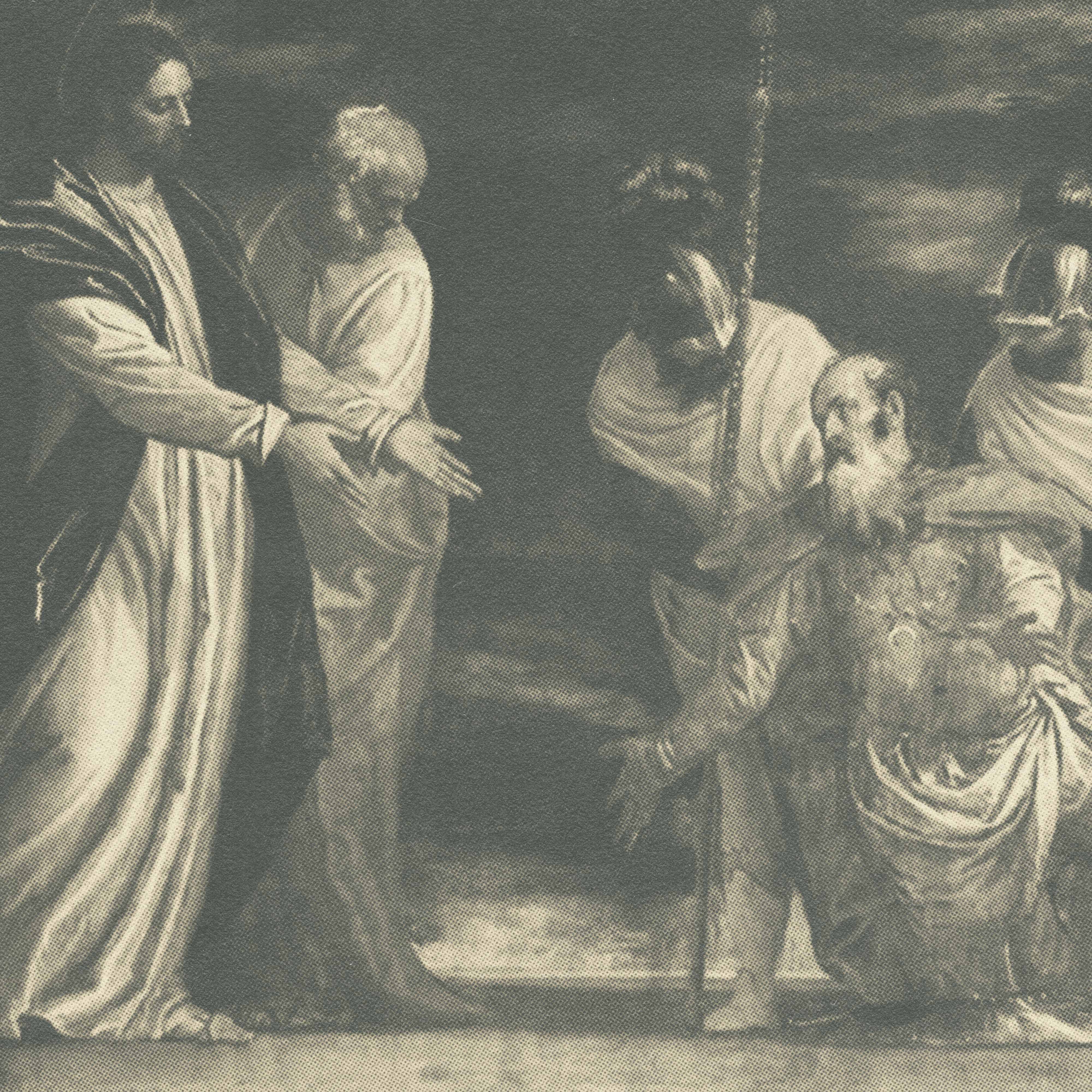
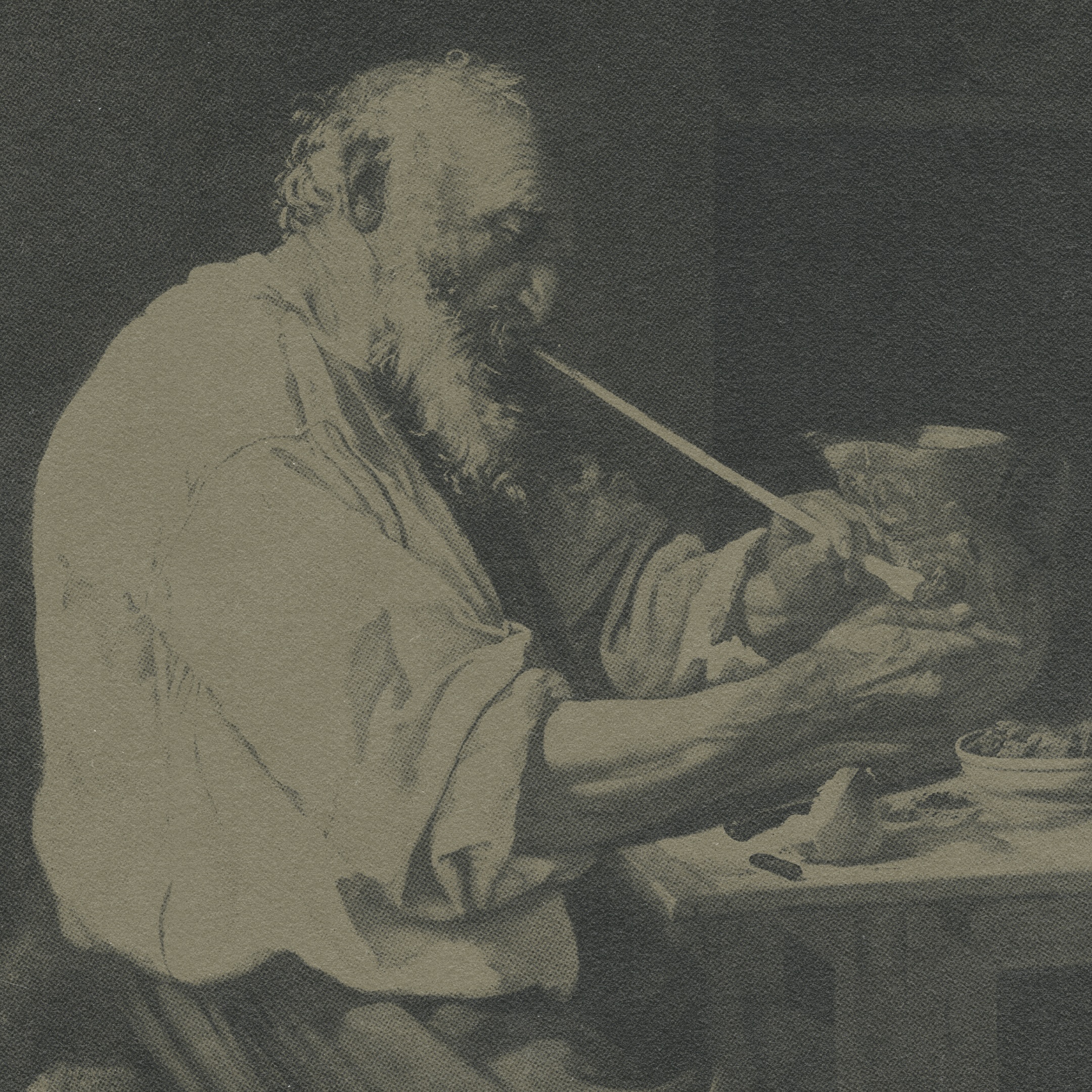
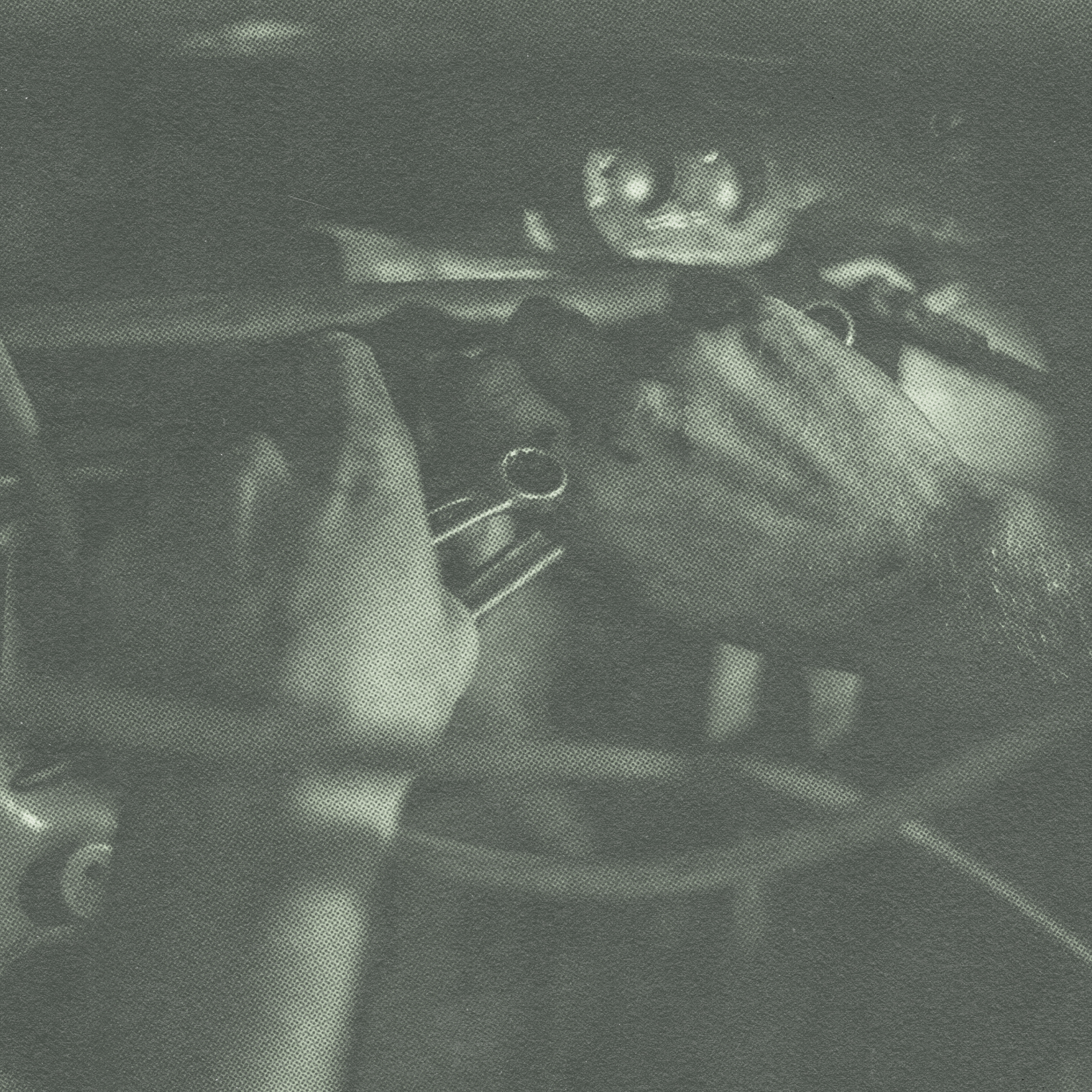
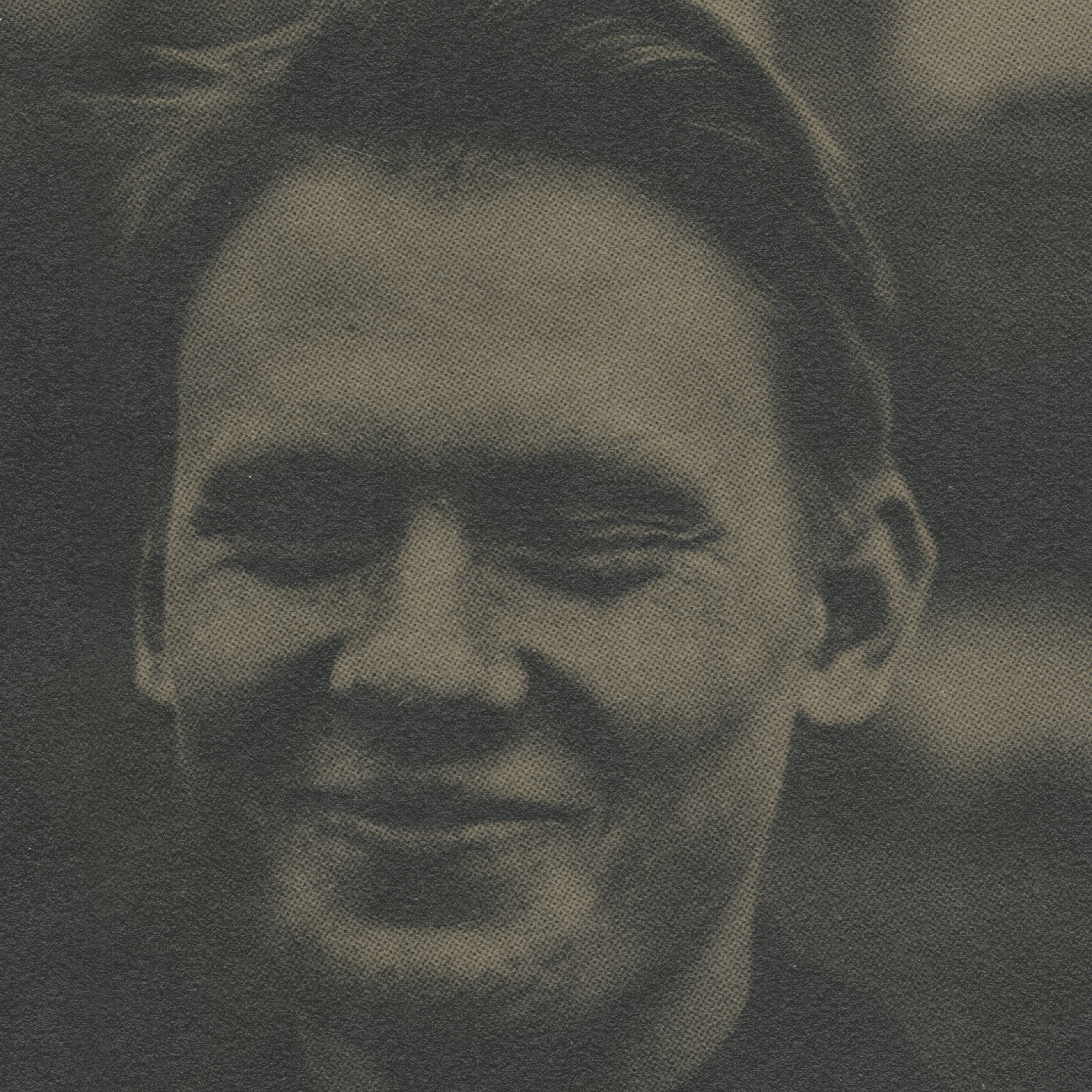
Here is an exercise to aid in the practice of contemplation. Below (to bring it full-circle) are several works of art. Some are photographs, others are paintings. Each is beautiful in its own way. Each reflects the nature, the character, the hope, the vision, the intention—the prayer—of their maker. Beside each, I have listed a few experiences I have when I take these pieces in. The experiences are what occurs to me—and in me—when I simply behold the image before me.
- What occurs in you when you do the same?
- What do you notice in your mood?
- What emotions do you experience?
- What thoughts?
- What do you feel in your body?
- Do the themes or motifs you find reflect any aspect of God to you?
- How would you express these?
Take 15-minutes and ponder as many of these pieces as you like. Take at least the first 10-minutes and ‘bring’ yourself to the piece. Let the piece bring itself to you. Perhaps it reminds you of an experience. Perhaps it takes you on a journey. As you bring your presence to the art in silence, you are in a state of contemplation. Take a few moments at the close of the 15-minutes to write down a few thoughts to share before we reconvene.
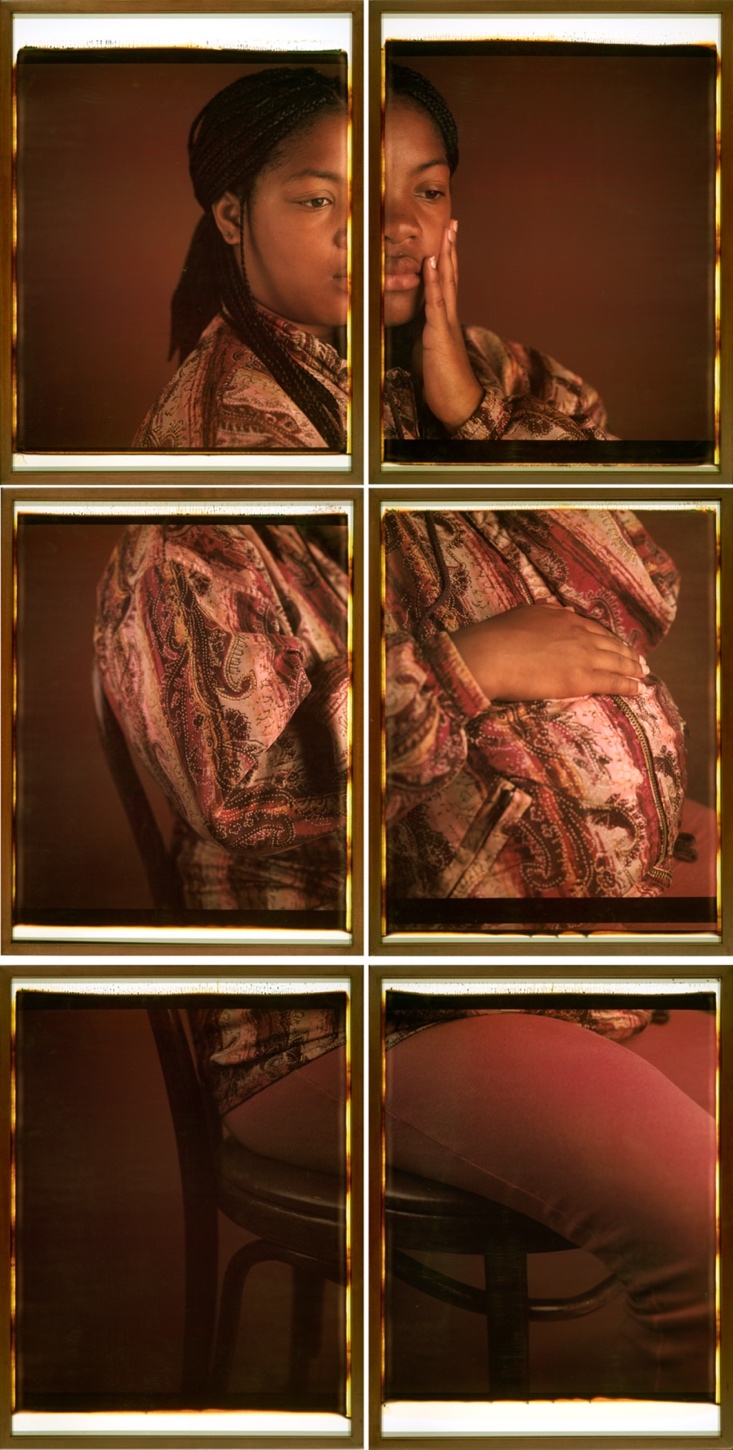
Artist: Photographer: Dawoud Bey
Photograph: Oneika
There is a life that wants to live in each of us—the life that is… us. The real person. We each carry a host of concerns that are important and are accordingly precious to us. This host of considerations is the range of hopes and possibilities that we keep in the deepest sanctuaries of the self. Life is both vulnerable and uncertain. We are each fragmented and incomplete on our own. We need trusted others in community with whom to discern the patchwork of our lives as we seek coherence and clarity in our journey.

Artist: Jonas Dovydenas
Photograph: 1968, Iron Worker, Chicago
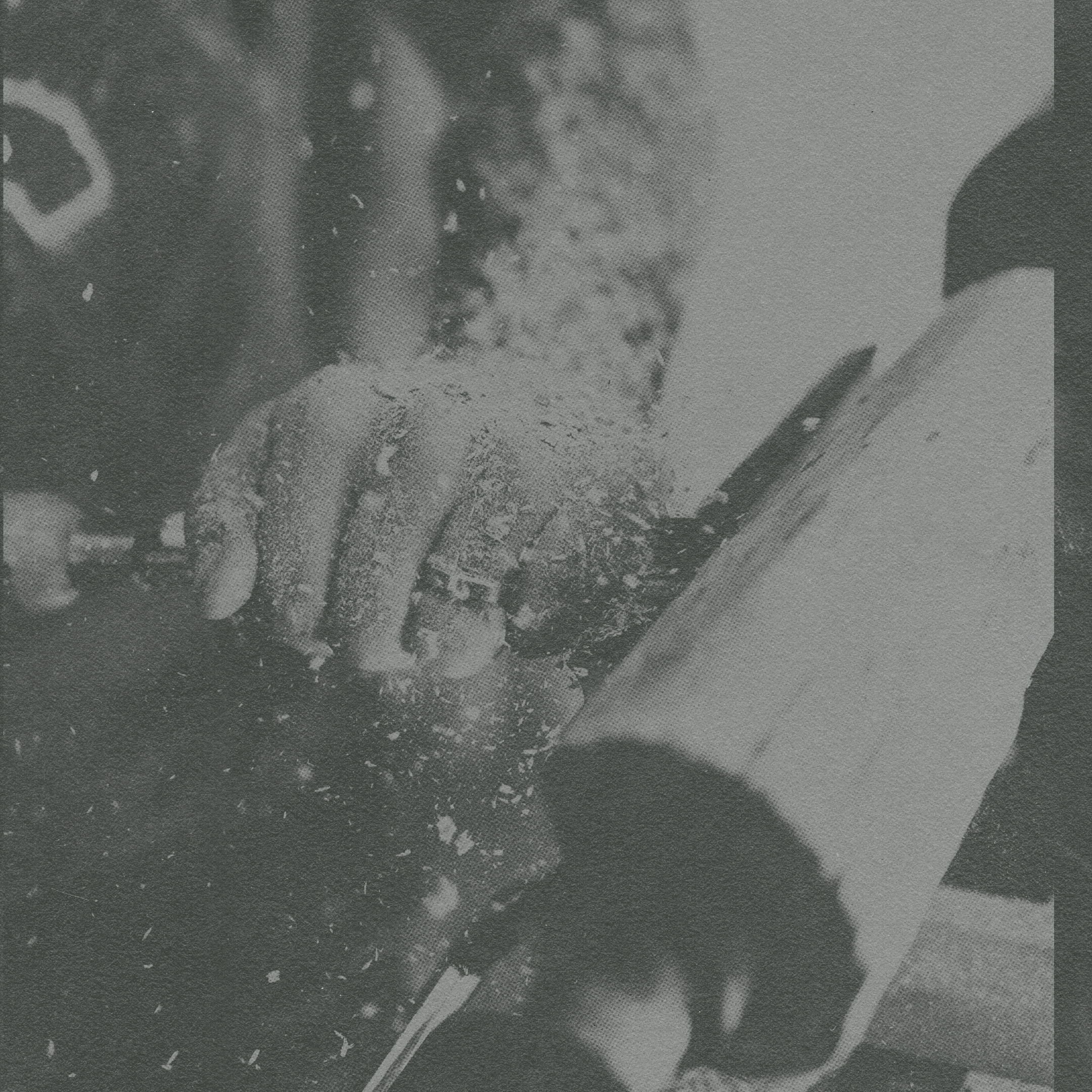
Fulfillment is found in the places that we compulsively avoid. The dynamics in life that are often the most difficult or uncomfortable. We can work a decade in a career without having clarified our true purpose. We can watch years go by in romantic relationships that aren’t matched to the true desires of our heart or vision for our lives. Sometimes we can find ourselves standing on the precipice of needed change without clarity on what to do next. Often, we need to true-up the story we’re living. We need to find the deeper purpose in our lives and reconsider why we’re in the relationships we’re pursuing. Sometimes, obstacles in our work invite that we evaluate the story of our lives and choose new pathways into a truer story.
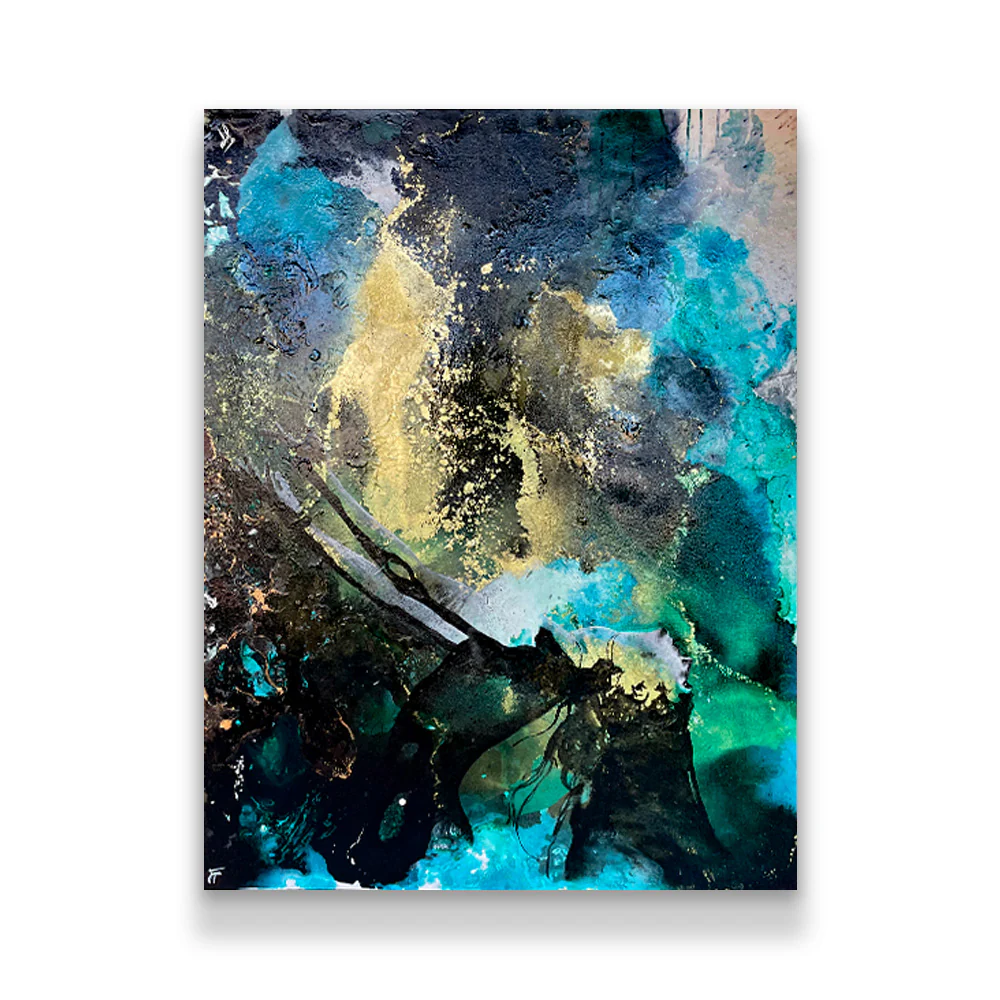
Artist: Jenny Vyas
Mixed Media on Canvas: 2020, Emancipate
Willingness to take responsibility for our lives can be daunting. The revelation that rescue—whether, from culture, or, its institutions—will come by no other means than with our purposeful collaboration and surrender to good can serve as a primary agent in our true becoming. Crisis is often the catalyst that summons us out of fatalism into our own true agency within the growing community inside of which we seek connection and purpose. The more we take responsibility for our sacred lives, the more we become a gift to others in community.
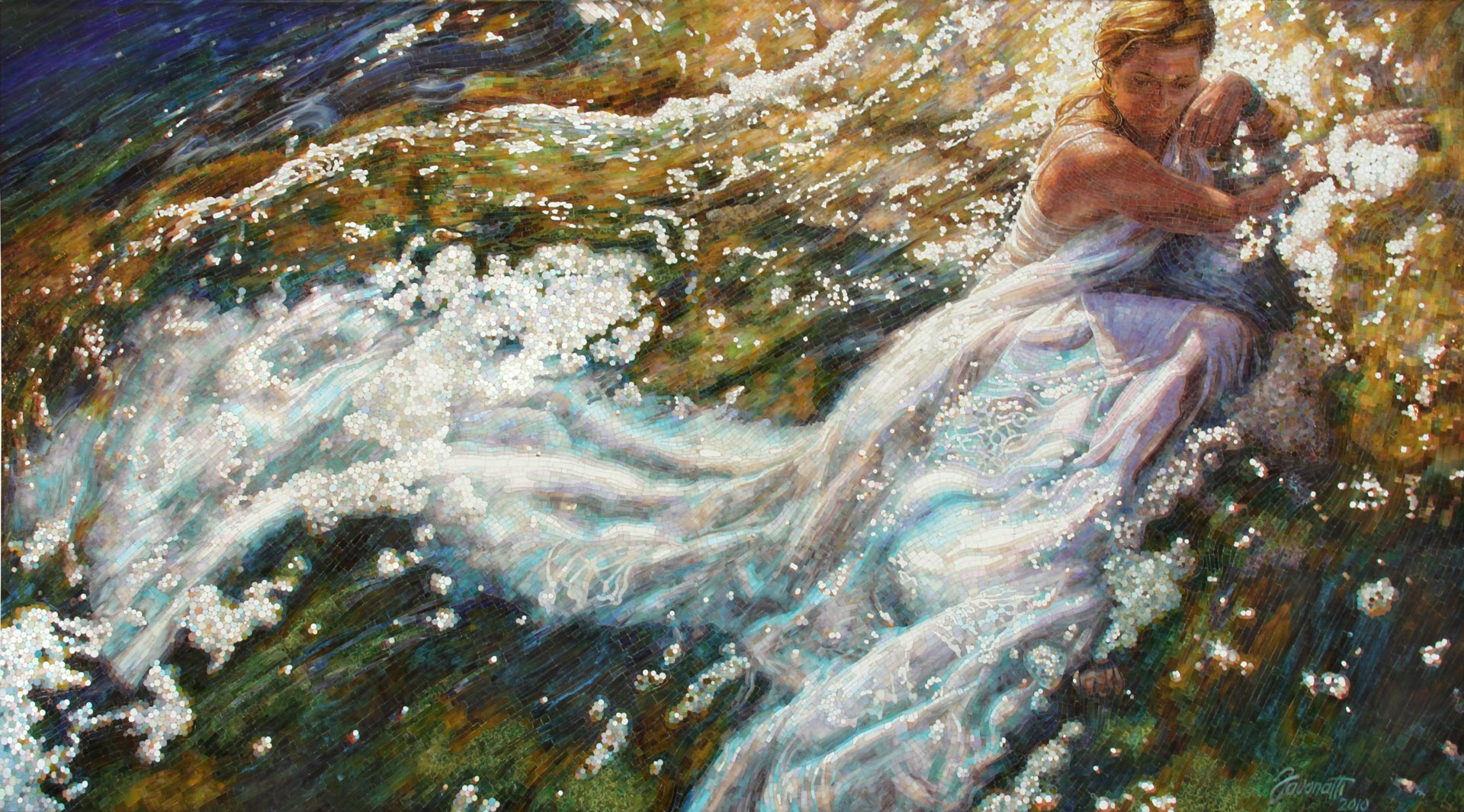
Artist: Mia Tavonatti
Stained Glass Mosaic Installation: Svelata (2010)
Once we’ve exhausted our resources within—when we look inside and find that we’re out of answers and options—we find that we must look elsewhere. We begin to listen for sources that stand the test of time and are aligned with the human needs that we are learning we all have. We look to wisdom—often cast in feminine form in ancient texts as, Sophia, wisdom calls to us from a better place and invites us into a better way. Wisdom is a timeless flow that invites our inhabitation, our taking up residence, in it as a way of life.

Artist: Kayla Mahaffey
Acrylic on Linen: Hold Close (2024)
When we walk through our door at the end of our day, we bring the child with us—the one that is shaken by the matters that overwhelm us in relationships and at work. We each hold close the true desires of our heart—the ones that we often keep in secret, the ones nearest our true human needs. We can learn to engage all people—strangers, friends, and family members—with the same view of their own vulnerability in a daunting world. We can support one another in bonds of trust that hold as sacred those matters that we all hold most dearly.